



Recent posts

More Noire Lore

A left-handed form of human endeavor


Attainable watches overlooked from Watches and Wonders


Recent Comments

For ~$6k I'd want a Glashutte Original 60s.

If I was buying for a "professorial" 80-year old who's not into watches I'd get him a Junghans Max Bill Mega Solar. Classy design with historical relevance, titanium and sapphire so it's light and can take a beating, solar powered and radio-set with a perpetual calendar so it's fire and forget, and if he does show an interest in watches it's one of the most interesting and well designed quartz movements made.

If you're into watches then, yea, you can get a SeaQ, Polaris or Bathyscaphe for the same dosh as a Submariner. Many consider GO, JLC and Blancpain to be on the next "tier" up from Rolex.
If you're into Rolexes then you don't have a choice.
A while back I did some research when I found a price list that showed my 1957 gold OP cost my grandfather, accounting for inflation, around $2700 (granted, gold has also gone way up but still). I was wondering what major watch company had prices around the same now as they did back then. The best answer I got was Longines.
Have a Watch Steward version of this thing on my 62MAS mod at the moment... thanks for reminding me I need to put it back on the green tropic rubber strap because, yea, it ain't great.

Edit to add: I have a generic version on a much smaller, lighter watch (Junghans Millennium Timer) and it's better. Still fiddly to put on, but feels more stable on the wrist.
I was thinking there really wasn't much that raised itself beyond mere dislike into hate or disgust territory for me until you reminded me of "tactical" watches.
I find the cutoff for really feeling diminishing returns is in the $1-2k range. In my experience a $1500 watch isn't going to be anything like "twice" the watch your Tissot is while the Gentleman really is a significant step up from a $375 watch. That said, and considering your preferences, I'll suggest German deck-watches in the $500-1000 range. It's a classic white dial with roman numbers style and the Germans tend to give some excellent bang for your buck.


It's all about manufacturing tolerances. Back in the 60s the parts of a watch weren't as precisely crafted as they are today. So the best way to get more accuracy was to have a higher beat rate to smooth out the inconsistencies. The price paid was greater wear and tear on the parts and lower power reserve.
Modern manufacturing methods make parts with far higher precision and greater strength. Materials science has made springs that can store much more energy and parts that can take much more wear.
So great, you say, easier to have the higher beat rate. Yes, but the higher precision makes the need for the higher rate less. There's less inconsistency beat to beat to have to smooth out. The only reason left for higher beat rate is for the sweep of the hand.
More posts
Eight Kilometers High


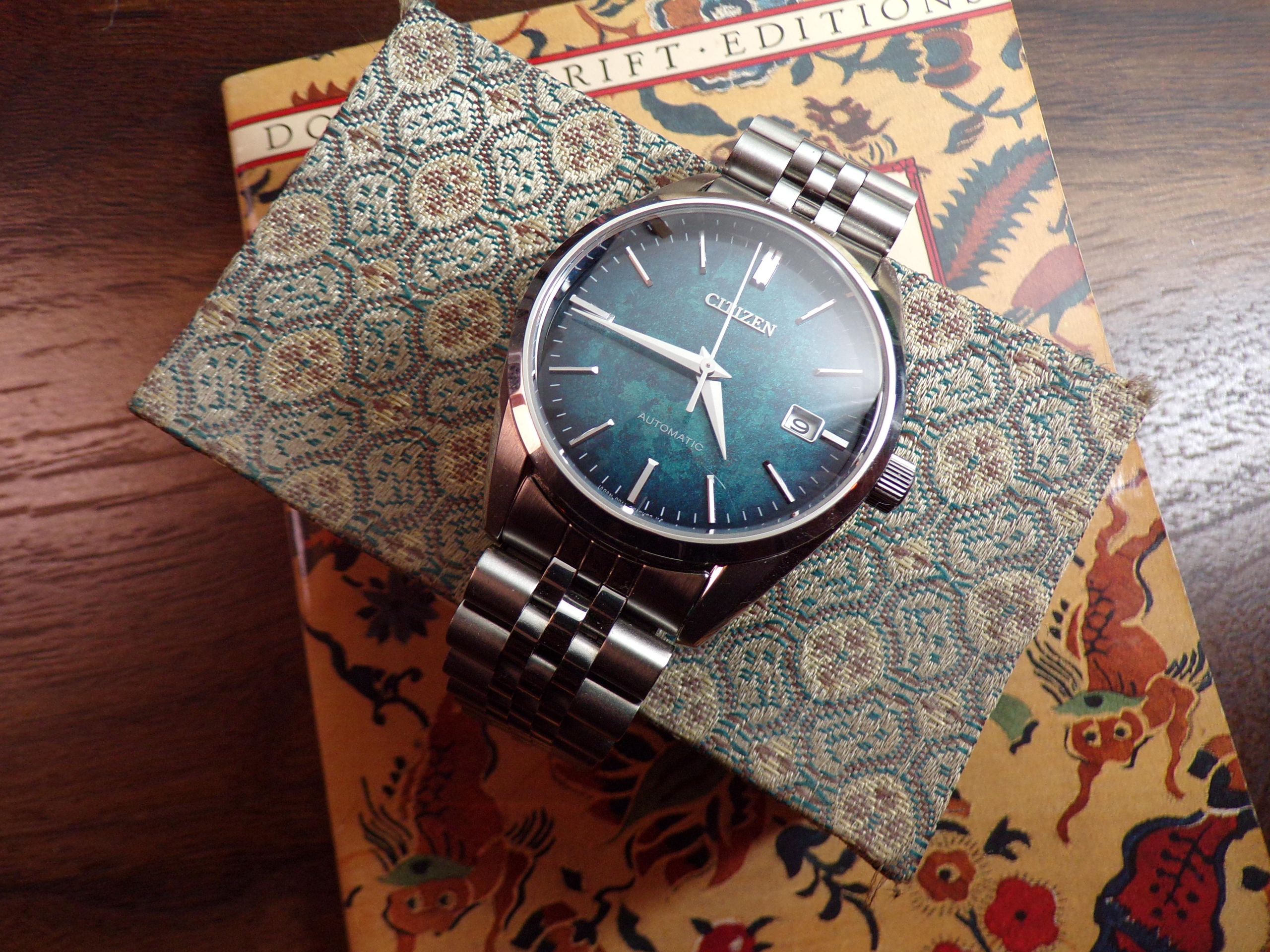
Citizen NB 1060 one week on the wrist