








Recent posts

Luch watch factory tour
When limited means limited


Vostok has caught the special edition bug

Recent Comments

Thanks. I wanted to try out the Duro on leather and this alligator (with builtin quick release springbars) keeps the theme aquatic.
I have been eyeing off a stingray as well, the dotty colouring would be a fair match for the mostly dotty indices:

The Duro can take to bracelets as well like this 4mm thick sharkmesh:

when you want to combine a bit of dressiness with wetability.
Steal! Even if the battery has a maybe a year or so left in it depending on how long it has been sitting there, still a steal.

Welcome to the Duro club.
On the occassions I have been on racetracks with either cars or bikes I have rarely if ever had a need for a chronograph watch, whether that watch is analogue or digital does not matter. The official timing from the track's system is what counts.
Decades ago I had a Citizen chronograph that was replaced by a Seiko solar digital. I think I still have that Citizen somewhere.
Some digital watch chronographs make me laugh by assuming the user is able to accurately operate little watch buttons to 1/100th of a second.
Chronographs look cool and sporty but that is a complication I can do without.
Way Downunder here in Melbourne Australia I use a Level 2 timeserver in my city. That is good enough for me and my motley collection.
I could look further afield for a Level 1 but then I'm concerned about the travel time of the NTP packet riding on UDP/IP. The time I get back from the timeserver would be the time it was when the timeserver sent the reply to my query, not the time when the reply arrives on my system.
So, any decent time-setting application on my systems should first be able to send multiple NTP requests to get a reasonable average estimate of a total round trip duration, then halve that to arrive at an estimated adjustment to add onto the time received in the final NTP request. At least that is how I would do it if I were programming a timeset application. Whether there are any apps that do it this way I don't know.
Over a week my Casio W217H varies less than my PC does. The Casio will gain about 2 seconds.


More posts
Vostok 650539: the Economy class ticket to ride the GMT bandwagon


Resin Redirect Part 2


20 minutes of Raketa watch factory tour
Detailed 37 minute video of Vostok watch construction
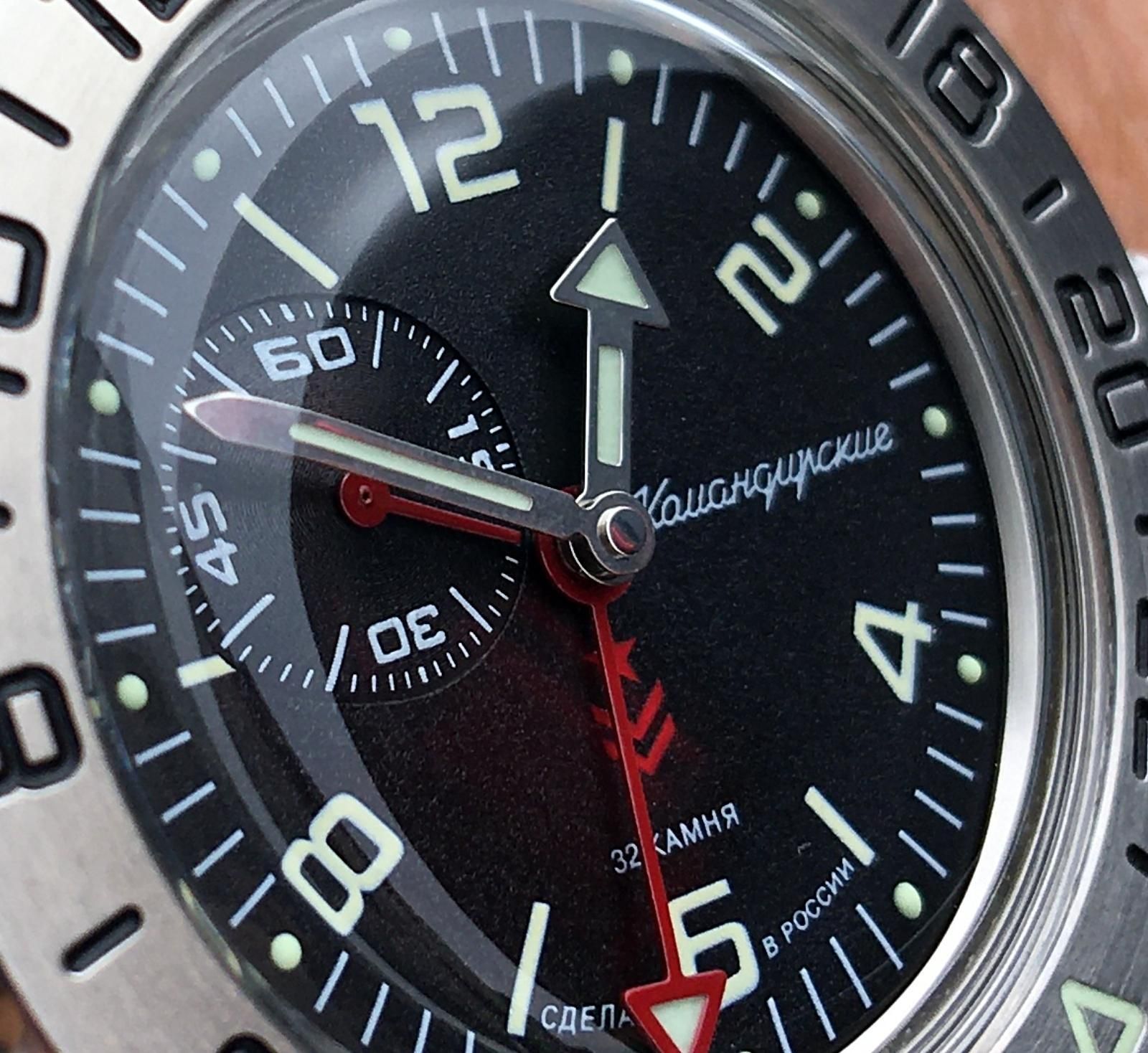
Space Forces Komandirskie

Is this an example of the "Chinese standard movement"?




