























Recent posts

A Quintessential Field Watch - Militado D12 "Dirty Dozen" Review

Militado D12


Casio's Best Kept Secret 🤫 - W93H Review

Casio W93H-1AV


How it Started vs How it's Going - SOTC


Recent Comments
Thinking man's metal, huh? Bit of a backhanded compliment, but I kind of get it. Still, the idea that metal isn't refined or is just noise is total rubbish. Good metal and classical music are the same.
Movements, codas, time changes, broad dynamics - metal uses more of these classical techniques than most contemporary genres do.
After all, who's more metal than Beethoven? Folk legend has it that as his hearing went, he had the legs sawed off of his piano and played it lying on the floor with his ear against the floorboards to get as much of the vibrations as he could. That's metal af.
For your enjoyment: Metal cover of Beethoven's Moonlight Sonata (Third Movement)
Ah yeah, that makes sense! The time subdivision I was describing would be pretty golden ratio-ish!
And the magic is that you don't need to know any of that to enjoy it. ✨
In my experience playing with other musicians there are two ends of the spectrum. I know a dude - old blues hound kind of guy - self-taught, can't read a lick of music, and doesn't know a circle of fifths from a Circle K. But you could play anything, and I mean anything, and he could just jump in and jam like he'd been playing the tune since he was in diapers. Change time signature, change key, change style, whatever - he was right there.
I know another young man who has perfect pitch and can sight read anything and sing it without an instrument to hand. He's a total music theory wizard. But ask him to improvise and he breaks out in a cold sweat. He can't do it. He's got music theory coming out of his ears. But the blues guy I mentioned? He's got chops. Totally different.
And that's what I love about music. It doesn't care about math. It's totally egalitarian and accessible to everyone from a blind old lady, to a kid in diapers. That's not math or science. That's magic.

Nice example! I'd never heard that track, so I went and gave it a listen.
Now, I'm by no means the nerdiest of music nerds, but it sounds to me like the chorus has at least three time signatures in it; 5/4, 4/4, and then maybe a truncated measure in the "pickup" or "turn-around". Come to think of it, it's probably in 9/8 instead of 5/4 because that could get you a funky little 7/8 subdivision that would fit.
So, this is a great example because I could talk about how 5/4 combines the rolling or waltzing feel of 2/3 with the marching feel of 4/4. I could point out little 3 against 2 polyrhythms happening and tell you how they build a sense of tension and disorientation. A sense of something being "wrong" just below the surface. I could give you the sheet music complete with instrumentation and say, "There! Now you know this Tool song." And even if you're a savant who can hear sheet music in your head, you couldn't experience the song without listening to Tool's performance of it. You would miss all of the emotion of it.
I could describe "Where is the Line?" by Björk as a 4/4 a capella song and be technically correct, but completely fail to convey to you just how crazy and emotionally confusing that song is. Or I could tell you that "Hey Ya" by Outkast is a song in 11/4 time about the futility of love, but if you never heard it, you would have no idea how fun and easy it is to dance to.
All-powerful math in the form of music theory can describe each of those songs and still completely fail to capture them. If it could, music would have been over back in the 15the century or earlier. After all, there are only 12 tones in a scale and 8 tones in a key and we've been rearranging them endlessly for most of human history. And still no one has ever said, "well everyone, I think we've done it all, that's a wrap."
There is no secret, predictive formula that can encapsulate the human relationship to art and beauty, and I think that's excellent news. I don't think a world that could be reduced to math and science would be a world worth living in.
More posts
Are You Suffering From Seasonal Watch Affective Disorder?


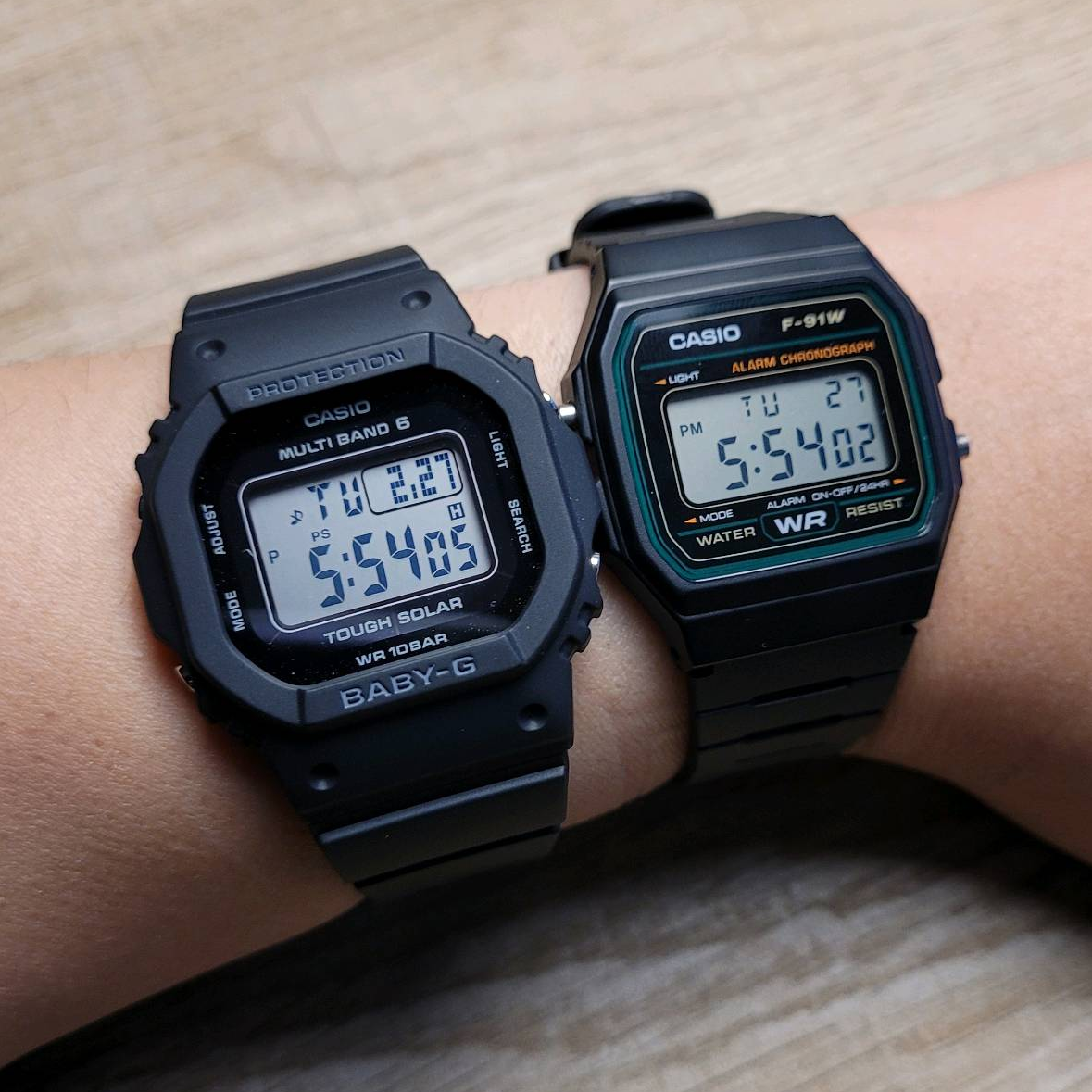
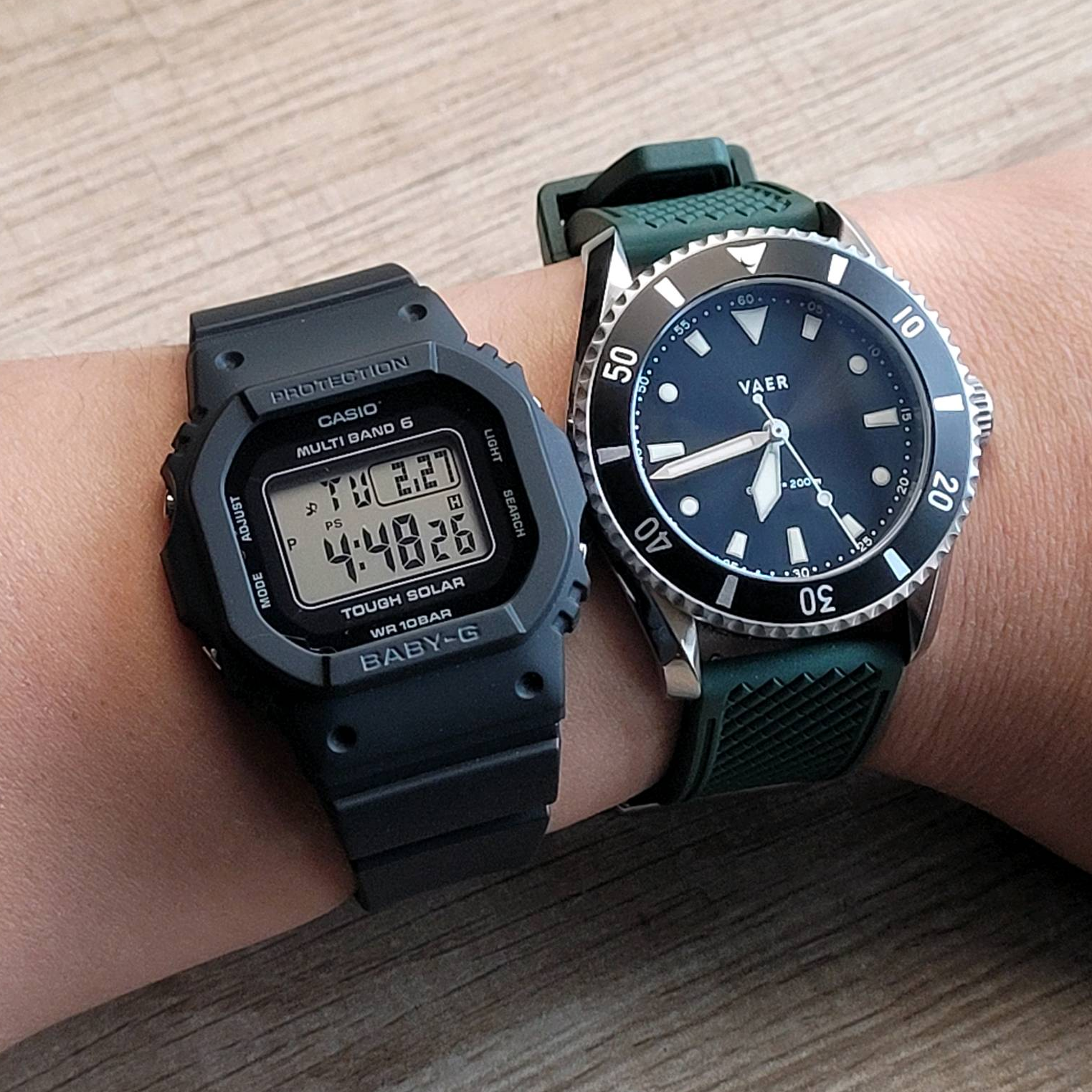
Smallest G Shock in the world (but still mighty)!




Deployant Clasp for Small Wrists?


The Incredible Shrinking Wrist


First ride of the year! 🏍️


Ring watches everywhere...




