




















Recent posts

Grand Seiko White Lion Chronograph GMT (SBGC253)


Day/Date Springdrive … does it exist?


Inventor of Network Time Protocol passed away Wednesday


Recent Comments

Yeah, I’ve witnessed the NH35’s performance drops off quite a bit when the power is low, though I don’t have any data on how low that is. Tough when they don’t have a power reserve meter, though perhaps one could do a controlled wind to ball park.
It’s important to remember COSC isn’t just +\- 4/6 spd dial up at 100% wind on a timegrapher, it’s within spec in a wide array of different conditions
The wide array of different conditions is spelled out in the original post. Regarding not “at 100% wind on a timegrapher”…that seems an obvious and practical speculation, since it defies imagination that someone would be keeping the test movements at 100% for 15 days straight at each orientation. Criterea 4 in original post point out a difference in horizontal and vertical positions of -6/+8, a quantitative value that can be measured. As mention a little above, that’s a 14 second variance, of which when I measure an NH35, I get about a 10 second variance between horizontal and vertical. …. So it seems we’re in agreement on that point. What is not known is the power level that is maintained for the testing. I agree that NH35’s fall off when power is low, though don’t have a quantitative feel for how low is low. However, we don’t know if that is actually part of the test criterea. 100% as you put forth seems an impractical value, and also an extreme that I doubt is necessary. Is it relevant to pass the test? I don’t see that it’s listed as a criterea to pass the test
Might help to put the time aspect in perspective too…. COSC is a 1973 standard, developed during a pre-quartz era. NH35 came out 38 years later (2011). Plenty of time for an industry leading company to exceed the standards and minimize production costs. There is a train of thought that says…COSC’s value is primarily for marketing purposes. Since it’s only available for Swiss companies, keeping it attainable but Swiss-only, helps bolster the marketed notion of “Swiss-made” means something.
I agree that all of the specs would fade during a wind down, though I don’t see that the COSC test has guidelines for allowing wind down. Naturally all watches would wind down over 15 days, so power must be maintained at some interval during a test. One could speculate that all test subject watches would have varying amounts of potential power reserve.
Yeah, that’s kind of my point. My $25 movements are actually exceeding those specification by my quick timegrapher readings. Two week logged runs in the field seems with 3 second variances imply that it looks good. The condition I put forth though is the power reserve is maintained on the NH35. Naturally watches running through a COSC test would not last 15 days without power maintained either.
I agree, the positional is the most challenging…but, read the criteria. It’s -6/+8. That’s a 14 second swing. Between horizontal and vertical. My time grapher is telling me now I get up to a 10 second swing between horizontal and vertical on two different NH35’s.
I log real usage of most of my watches in an app called watch times.
https://apps.apple.com/us/app/watchtimes-watch-tracker/id1500152333
I make adjustments using a Weishi 1900 timegrapher. I decided the time grapher is good for relative/displacement setting, useful after baselining typical usage offset which daily usage of the app provides. Average orientation and power reserve affect the watch so much that time grapher alone doesn’t achieve what I want
More posts
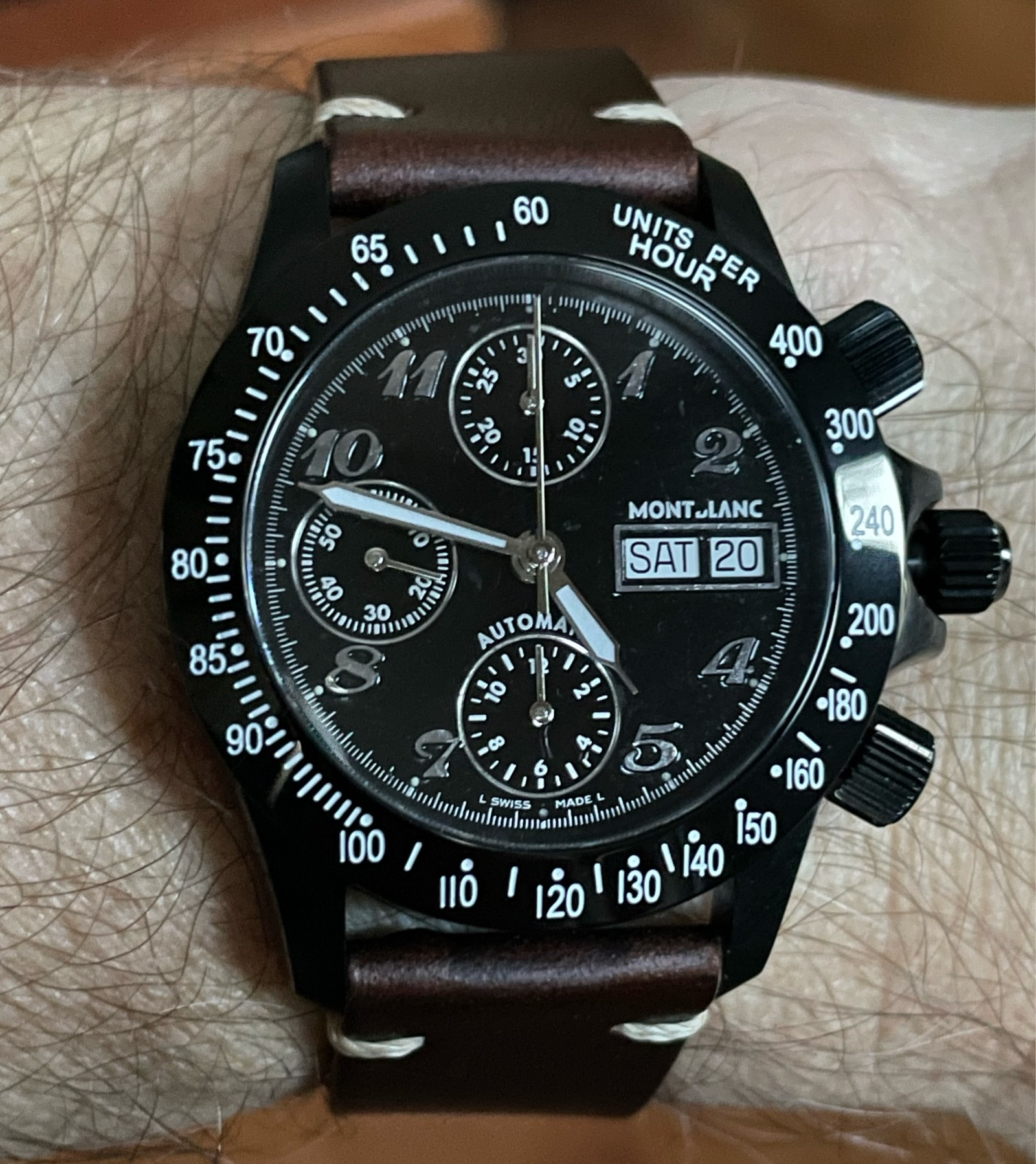
New build 7750 - mont lanc


How does it work? (Accutron Spaceview 2020)


New Accutron Spaceview Evolution


Gen-Z think analog watches are cool


ETA Valjoux 7751 mod build


ETA Valjoux 7750 build…fail, fail, fail… it tells Time!




