Fixing Omega - Part 1?


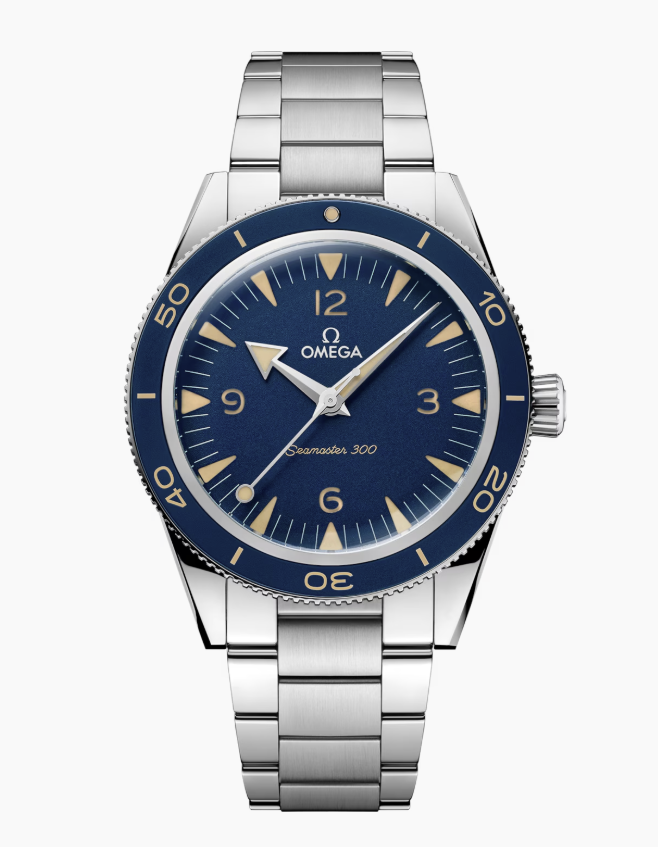
I don’t know if I’m actually going to go further with this idea, but I’ve been thinking about Omega quite a bit lately. It’s a brand that I really want to like, but certain things drive me a bit crazy. I’m very much a “buy the brand” kind of shopper.
Unfortunately, I have concerns about how Omega is run. I’d love it if Swatch sold them. A lot of the weaknesses are likely how Swatch runs things or doesn’t manage them effectively.
I’ve spent my entire career in American manufacturing, from dealing with government contracts and aerospace to private equity and pharmaceuticals. I’m not saying that translates to me being some kind of expert in watch manufacturing – it doesn’t. But some things I see are just hard to understand, and I like theorizing about how I would fix them.
The Problem: Bloat
It’s not an original take, but it doesn’t make it less true. Omega has a ludicrous number of options. Hight amounts of variation reduces quality, both in reality and in perception.
The Collections I’m fixing – Seamaster 300 and Seamaster 300M.
Currently, between these two collections, there are 67 total variations – 8 for the 300 and 59 for the 300M. The Seamaster 300 is the more vintage option, while the Seamaster 300M is the bread-and-butter tool watch option.
Step One: Kill the 300
Yep, it’s gone. That’s 8 watches out of the catalogue. Don’t worry, I have a plan.
Step Two: Introduce the 39mm and 36mm 300M
One of my biggest issues with the Seamaster 300M is that I’m sized out of it. It’s a unique design, houses a great movement, and is almost 50mm lug-to-lug! I’ve tried one on, and although Omega did a good job on the case design, it’s still too large for my 6.5” wrist.
I know I’m not the only one with this problem. Overall, I think the design language of the 300M is one of Omega’s best, perhaps second only to the Speedmaster.
I’d introduce a 39mm variant with the exact same design language as the 42mm – keep the helium escape valve and everything. I would want it thinner – no thicker than 12.5mm. It doesn’t need to be the thinnest, but the current 13.5mm thickness of the 42mm is a non-starter for me. Let’s shave a millimeter off and capture customers that otherwise wouldn’t be looking at a 300M.
For the 36mm, I’d go to the design of the since cancelled 300 series. The 36mm will be our vintage style watch – no helium escape valve.
For both watches, we’ll only have 3 dial olors; Black, White, and Blue. Only steel watches, with choice of black or orange rubber straps, mesh, and steel bracelet. If the watches sell like hotcakes, we’ll expand to a green or some other color and maybe a titanium variant.
Step Three: Trim the 42mm 300M collection and make it thinner
There are 59 variations of the 42mm 300M. We’re going to get that closer to 16. Crazy? What’s crazy is having 24 variants in gold. I wouldn’t even have one – we have other collections where we can do gold. We’re all steel and titanium because these watches are tool watches.
4 dial colors; White, Black, Blue, and Green. Choice of black or orange rubber, mesh, or steel/titanium bracelet. We’ll throw in one bronze choice.
I’m not going to address all the special editions Omega does for the Olympics and such. I’m good with the titanium James Bond watch – but the other special editions I’d prefer to drop.
We’re also going to put the 42mm on a diet and drop a millimeter in thickness. We don’t need to be the thinnest, just need to be competitive.
Step 4: The Pricing Structure
Currently, the steel 42mm 300M on strap is $6,300 USD and $6,700 on bracelet. We’re going north with the 42mm and south with the other two sizes. The new pricing brackets are below.
· 42mm steel on strap: $6,500
· 42mm steel on bracelet: $6,900
· 39mm steel on strap: $6,150
· 39mm steel on bracelet: $6,450
· 36mm steel on strap: $5,600
· 36mm steel on bracelet: $5,900
We have two new case sizes, but we’ve reduced our overall variation by roughly 50%. No more precious metal unless we have overwhelming customer demand – we’ll focus our efforts on other collections with those. Titanium and bronze only in our OG 42mm size. The 39mm and 36mm will start with limited variations unless sales dictate the introduction of a fourth color or titanium variant.
We’re reducing our variations while increasing the choices we’re giving our bread-and-butter customers. We’re also telling upstarts like Tudor (of which I’m a fanboy) that we offer true in-house movements and better finishing for about $1k more.
Obviously, I'd actually need to see the numbers before I made these decisions. What's selling and what's not selling? What markets like which watch. The goal isn't always to offer as few options as possible, but it is to remain lean and efficient.
Anyway – I know this is a long post, but I like theorizing about this stuff. If any of you stayed around and actually read the plan, let me know what you think.

But how will I tell the time?



Omega fix = slim the lineup and bring less special models