







Recent posts

Lord Elgin and Casablanca — An American Watch for an American Icon


Citizen Brycen Super Titanium Perpetual Calendar — The Ultimate Grab-and-Go Tool Watch?


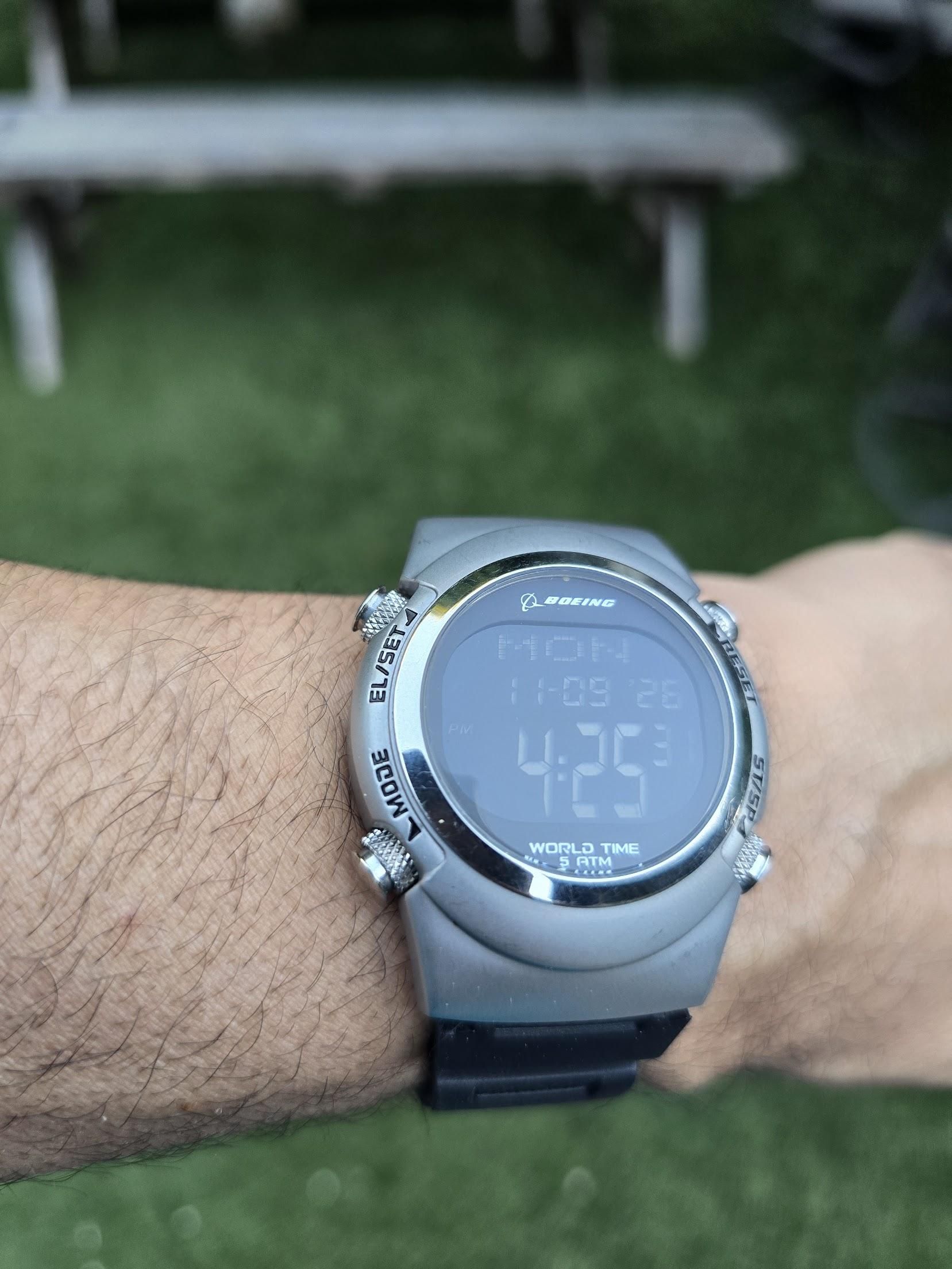
Boeing World Time: A $15 Digital GMT-ish Watch That Flies!


Recent Comments
Absolutely — and you’re right to point that out.
Since these are watches I currently own, it’s fair to say I obviously like them — otherwise they wouldn’t have stayed in the collection. That naturally brings a positive bias with it. At the same time, I really like your point about the value of acknowledging potential negatives as well. No watch is perfect, and being open about trade-offs actually makes the discussion more interesting and useful.
I appreciate the thoughtful perspective, and I’ll keep that in mind as I write future reviews. Thanks again for engaging — and for pushing the conversation in a good direction.
Great watch for every occasion

At first glance, the Aquatimer Chronograph can look like a mono-pusher chronograph, but it is not. This watch uses a conventional two-pusher chronograph layout based on IWC’s Valjoux-derived caliber 7922x. The pusher at approximately 2 o’clock controls the start and stop functions, while the reset is handled by a second pusher positioned lower on the case. Because this reset pusher sits close to the bezel-control crown, the layout can appear unconventional, but mechanically it is a standard, highly robust two-pusher chronograph architecture rather than a single-pusher system.
The crown positioned around 4 o’clock is dedicated exclusively to the internal rotating dive bezel and has no connection to the chronograph functions. Turning this crown rotates the elapsed-time bezel beneath the crystal, keeping the timing scale protected inside the case. This internal-bezel approach reflects IWC’s preference for safety and functional integrity, as it eliminates the risk of accidental bezel movement caused by knocks or impacts that can affect external dive bezels.
Importantly, this bezel-control crown is not screw-down. It operates via a friction-based system with internal gaskets that maintain water resistance without requiring threads or a locking mechanism. This allows the bezel to be adjusted quickly and smoothly while still preserving the watch’s dive capability. The crown itself has deliberate resistance and is well protected by its position on the case, making accidental movement unlikely in real-world use.
Taken together, these details explain why the Aquatimer Chronograph is often misunderstood. The layout is not designed to be visually intuitive at a glance; it is designed to be mechanically logical and reliable under actual use. Every control has a single, clearly defined purpose, and every engineering choice reflects IWC’s long-standing philosophy of building professional instruments rather than decorative sports watches.
I actually think we’re closer in mindset than it might appear at first.
What you’re describing is exactly what a good tool does: it disappears into your behavior. You don’t think about it, you don’t dramatize it, you just glance and move on. That kind of relationship only forms with things that are genuinely useful. A wristwatch excels at that—instant access, zero friction, no cognitive overhead, no notifications riding along for free.
And I completely agree: checking time on a wrist is more practical than fishing it out of the corner of a screen. Not because phones can’t tell time, but because they don’t present time well. A watch gives you temporal context at a glance. You don’t need seconds or precision—you just need orientation. “Where am I in time?” That’s something analog dials do incredibly well.
Where I still draw the distinction is this: something can be a tool and an accessory at the same time.
A hat blocks the sun, a jacket keeps you warm, shoes protect your feet—yet we still call them accessories when they’re chosen with intent. The watch earns its place as a tool through function, but the moment we choose which one to wear—mechanical or quartz, clean or busy dial, simple or ornate—it steps into accessory territory too.
And yes, I’m with you on complications. Moonphase and power reserve? Absolutely more accessory than necessity. But even then, I think that’s part of the fun: acknowledging what we actually use versus what we simply enjoy having there.
In the end, I don’t think it’s about cosplay or psychological comfort at all. It’s about frictionless utility meeting personal preference. Some of us lean harder into the utility, others into expression—but we’re all still glancing at our wrists for the same reason.
Different paths, same glance.
That’s a totally fair take—and honestly, one I respect.
I think the difference between us is less about watches and more about how we interact with the world. For you, the watch replaces the phone by design. It’s a boundary device. It lets you move through life without being tracked, pinged, or pulled online—and that absolutely makes it a necessity. In that context, it’s a tool in the purest sense of the word.
I come at it from a different angle. I don’t deny that watches can be tools—I just don’t think they have to be. For me, once timekeeping stopped being scarce, the watch was freed up to become expressive. Not jewelry in the precious sense, but personal. Something chosen rather than required.
And I’m 100% with you on the forced sentimentality. The “bought this to hand down to my unborn child” narrative makes me cringe too. Most watches are bought because we wanted them at the time—nothing wrong with that. If someone ties memories to a watch later, great. If not, also great. I don’t think meaning needs to be prepackaged.
I also appreciate your point about not caring for finishing, textures, or dial theatrics. That’s actually what makes this hobby work—someone can value restraint and function while someone else obsesses over surfaces and symmetry, and neither is doing it wrong.
Different mentalities, same hobby. Tools for some, accessories for others. And the fact that both coexist is what keeps it interesting.
Variety really is the spice of life 🍻
More posts
Hamilton Lexington (1941) — The Forgotten Oppenheimer Watch: 85 Years of American Watchmaking History

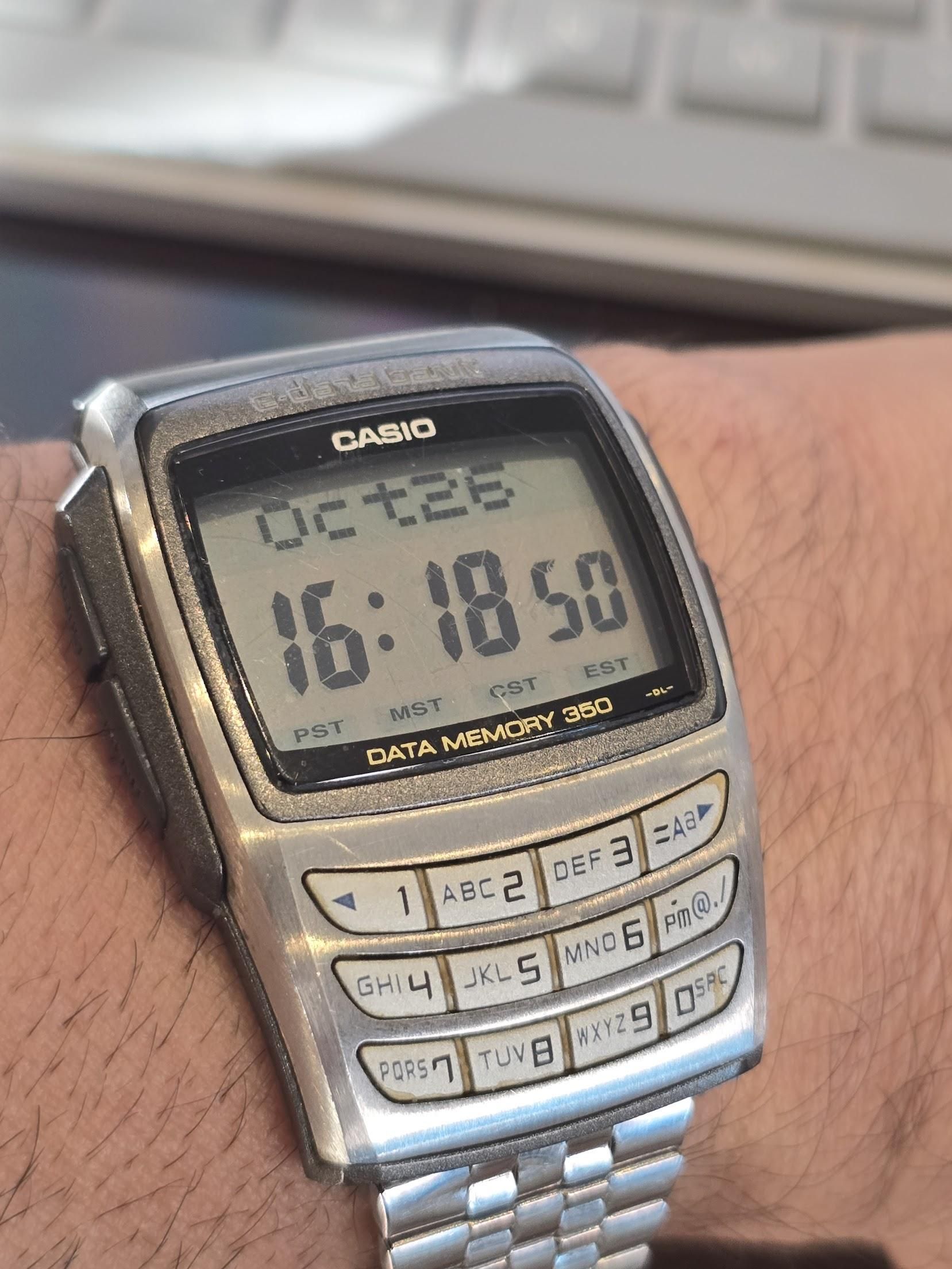
Casio EDB-610 Data Bank 350: A Computer on Your Wrist Before Smartwatches Existed


Hudson-Harris HH Digital: When Hughes Aircraft Made Watch Movements


Panerai PAM 090: Where Function Starts to Show Itself


Review: Before Seamaster Meant “Diver”: Omega Seamaster Ref. 14700

Omega Seamaster 14700


Review: Not your average review of ST19 ---- Because the internet already decided what it wants this watch to be

Sea-Gull ST19 Chrono




